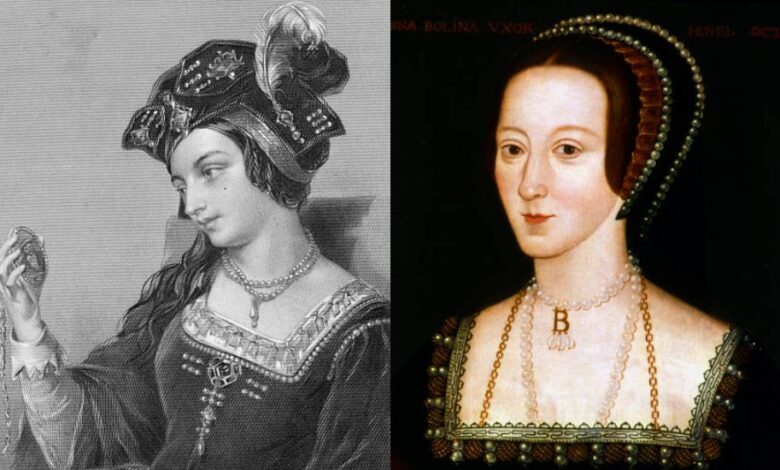
Anne Boleyn remains one of the most influential, controversial, and captivating figures in English history. Her life story has inspired countless books, films, and television series, and she continues to fascinate audiences centuries after her death. As the second wife of King Henry VIII and the mother of Queen Elizabeth I, Anne Boleyn’s legacy is woven deeply into the political, religious, and cultural transformation of England. Her life was marked by ambition, romance, conflict, and ultimately tragedy, yet her influence reshaped the very foundations of monarchy and organized religion in the 16th century.
This long-form article explores Anne Boleyn in depth: who she was, her background, age, family, marriage, children, the controversies surrounding her downfall, portrayals in film and television—especially her connection to actress Claire Foy—and even commonly searched questions such as “Anne Boleyn net worth.” By the end, you will have a comprehensive understanding of her extraordinary life and enduring legacy.
Who Is Anne Boleyn?
Anne Boleyn was the second wife of King Henry VIII of England and the woman who played a pivotal role in one of the most dramatic political and religious shifts in European history. She became Queen of England in 1533, and her marriage to Henry VIII directly contributed to the breaking of England away from papal authority and the creation of the Church of England.
Before becoming queen, Anne served in the courts of both the Netherlands and France, where she developed the charm, sophistication, and intelligence that later captivated Henry VIII. Unlike many women of the Tudor period, Anne received a high-quality European court education, which exposed her to languages, poetry, music, and diplomacy.
Anne was not merely the king’s love interest—she was a political figure who engaged in discussions on religion, reform, culture, and state affairs. Her influence on the king was undeniable, and to her supporters she represented progress, refinement, and the promise of strong leadership through her daughter. However, to her enemies, she represented disruption, ambition, and a challenge to the traditional Catholic order.
Anne Boleyn’s Age: When Was She Born?
One of the enduring points of debate in Tudor history is Anne Boleyn’s exact birth year. Historians generally agree on two possible dates:
- 1501
- 1507
If Anne was born in 1501, she would have been about 35 years old at her death.
If she was born in 1507, she would have been about 28 or 29.
Most modern scholars lean slightly toward 1501, but there is no definitive record that confirms it. This uncertainty stems from limited documentation of her early life, as birth records for noble families were not always preserved during the early 16th century.
Anne Boleyn’s Family: Parents, Brother, and Sister
Anne Boleyn was born into the Boleyn family, a rising noble household with significant political connections.
Father: Thomas Boleyn
Anne’s father, Thomas Boleyn, was a diplomat, nobleman, and later Earl of Wiltshire and Earl of Ormond. He was well-educated, fluent in multiple languages, and served as ambassador to several European courts. His ambition and connections were critical in shaping the futures of all three of his children.
Mother: Elizabeth Howard
Anne’s mother, Lady Elizabeth Howard, came from the powerful Howard family, one of the most influential noble lineages in England. As the daughter of Thomas Howard, 2nd Duke of Norfolk, she ensured that her children were well positioned in the English aristocratic hierarchy.
Siblings: Mary Boleyn and George Boleyn
Anne had two siblings:
- Mary Boleyn – Her older sister, known for her rumored affair with King Henry VIII before Anne entered the king’s circle. Mary served at the French court and later the English court.
- George Boleyn, Viscount Rochford – Anne’s only brother, an educated courtier who shared her interest in culture and reformist religious ideas. George was highly favored until both he and Anne were arrested in 1536.
Anne’s bond with her brother George was strong, and some of the most damaging accusations against her involved him—charges that historians widely agree were politically motivated and false.
Anne Boleyn’s Early Life and Rise at Court
Anne spent part of her youth in the courts of Margaret of Austria (Netherlands) and later in France, where she served Queen Claude. These experiences shaped her into a sophisticated, fashionable, and multilingual young woman. Upon her return to England around 1522, she gained attention for her intelligence, wit, musical talent, and style.
Anne caught the eye of King Henry VIII around 1525. Unlike many court ladies who entertained relationships with the king, Anne refused to become his mistress. This resistance made her even more desirable to Henry, who soon became obsessed with winning her as his wife.
Anne Boleyn Married To: Henry VIII
Anne Boleyn married King Henry VIII, but their marriage was anything but simple. Henry’s first marriage to Catherine of Aragon produced only one surviving child—Princess Mary. Desperate for a male heir, Henry sought annulment. The Pope refused, prompting Henry to break from Rome and declare himself head of the Church of England.
Anne and Henry secretly married in late 1532, with a formal ceremony in early 1533. Soon after, Anne was publicly crowned Queen of England at Westminster Abbey in a lavish ceremony.
But the marriage was turbulent. Henry’s expectations for a male heir never wavered, and Anne’s failure to produce a surviving son contributed to her downfall.
Anne Boleyn’s Kids
Anne Boleyn gave birth to one surviving child:
Elizabeth I (born September 7, 1533)
Elizabeth would later become one of the greatest monarchs in English history, reigning for 44 years during what is known as the Elizabethan Golden Age.
Anne also suffered two or three miscarriages, including one in 1536 that was reportedly a male fetus—an event that deeply affected her standing with the king.
Anne Boleyn’s Net Worth: A Modern Question with No Historical Basis
Many people search for “Anne Boleyn net worth,” but such a concept did not exist in the 1500s. Wealth was measured in:
- land,
- titles,
- gifts from the king,
- dowries,
- and family holdings.
Anne enjoyed significant wealth during her queenship, including jewels, gowns, estates, and royal income. However, estimating a “net worth” in modern currency is neither accurate nor historically meaningful. If one attempted to quantify her royal privileges, it would likely reflect millions in modern value, but historians avoid this due to the different nature of Tudor economics.
Anne Boleyn’s Downfall and Death
Anne’s fall from power was as rapid as her ascent. After failing to produce a male heir and facing political enemies at court, she became vulnerable. Thomas Cromwell—Henry’s chief minister—sought to remove her influence and align himself with a new queen.
In May 1536, Anne was arrested and charged with:
- adultery,
- incest (with her brother George),
- treason,
- and conspiring to kill the king.
Modern historians widely agree that the charges were fabricated. The trial was politically motivated, designed to clear the way for Henry’s marriage to Jane Seymour.
On May 19, 1536, Anne Boleyn was executed by sword at the Tower of London. A French executioner was brought in specifically to give her a swift and “merciful” death.
Anne died with dignity, speaking gracefully and refusing to condemn Henry VIII. She was buried in the Chapel of St. Peter ad Vincula within the Tower grounds.
Anne Boleyn in Movies and Television
Anne Boleyn has been portrayed in dozens of films, television series, novels, and stage productions. Her life is one of the most dramatized in British history.
Some well-known portrayals include:
- Geneviève Bujold in Anne of the Thousand Days (1969)
- Natalie Dormer in The Tudors (2007)
- Natalie Portman in The Other Boleyn Girl (2008)
- Jodie Turner-Smith in Anne Boleyn (2021)
Her story’s blend of romance, conspiracy, power, and tragedy makes it irresistible to filmmakers and audiences alike.
Anne Boleyn and Claire Foy
One of the most praised portrayals of Anne Boleyn is by Claire Foy, known globally for The Crown. Claire Foy played Anne Boleyn in the BBC television adaptation of Hilary Mantel’s Wolf Hall (2015).
Foy’s performance was noted for:
- emotional depth,
- historical nuance,
- and capturing Anne’s intelligence and vulnerability.
This role helped solidify Claire Foy as one of the finest historical drama actresses of her generation.
Anne Boleyn’s Legacy
Anne Boleyn’s legacy stretches far beyond her short life and violent death. Through her daughter Elizabeth I, she became the mother of a powerful new era in English history. Elizabeth’s reign marked the flourishing of English culture, global exploration, and political stability.
Anne also played a vital role in the English Reformation, even if unintentionally. Her marriage to Henry VIII catalyzed the break from Rome, leading to the creation of the Church of England—a shift that shaped Western Christianity and influenced global history.
Despite the circumstances of her death, Anne Boleyn remains admired for:
- her intelligence,
- her courage,
- her role in shaping England’s political direction,
- her influence on religious reform,
- and her legacy through one of history’s greatest queens.
Her story is a blend of triumph and tragedy, ambition and betrayal, love and loss. It is no wonder she is still the subject of intense fascination today.
Conclusion
Anne Boleyn’s life is one of history’s most compelling narratives. From her noble upbringing to her sophisticated European education, from her rise to queenship to her tragic fall, she remains a symbol of ambition, intelligence, and resilience. Her marriage to Henry VIII changed the course of English history forever, and her daughter Elizabeth reshaped the monarchy and ushered in a golden age.
Whether examined through historical documents, dramatized in movies, or portrayed by talented actresses like Claire Foy, Anne Boleyn continues to captivate new generations. Her story will always be retold, reinterpreted, and re-imagined, proving that Anne Boleyn is not just a historical figure—she is a cultural icon.
This article is proudly published for readers of newslyblogs.